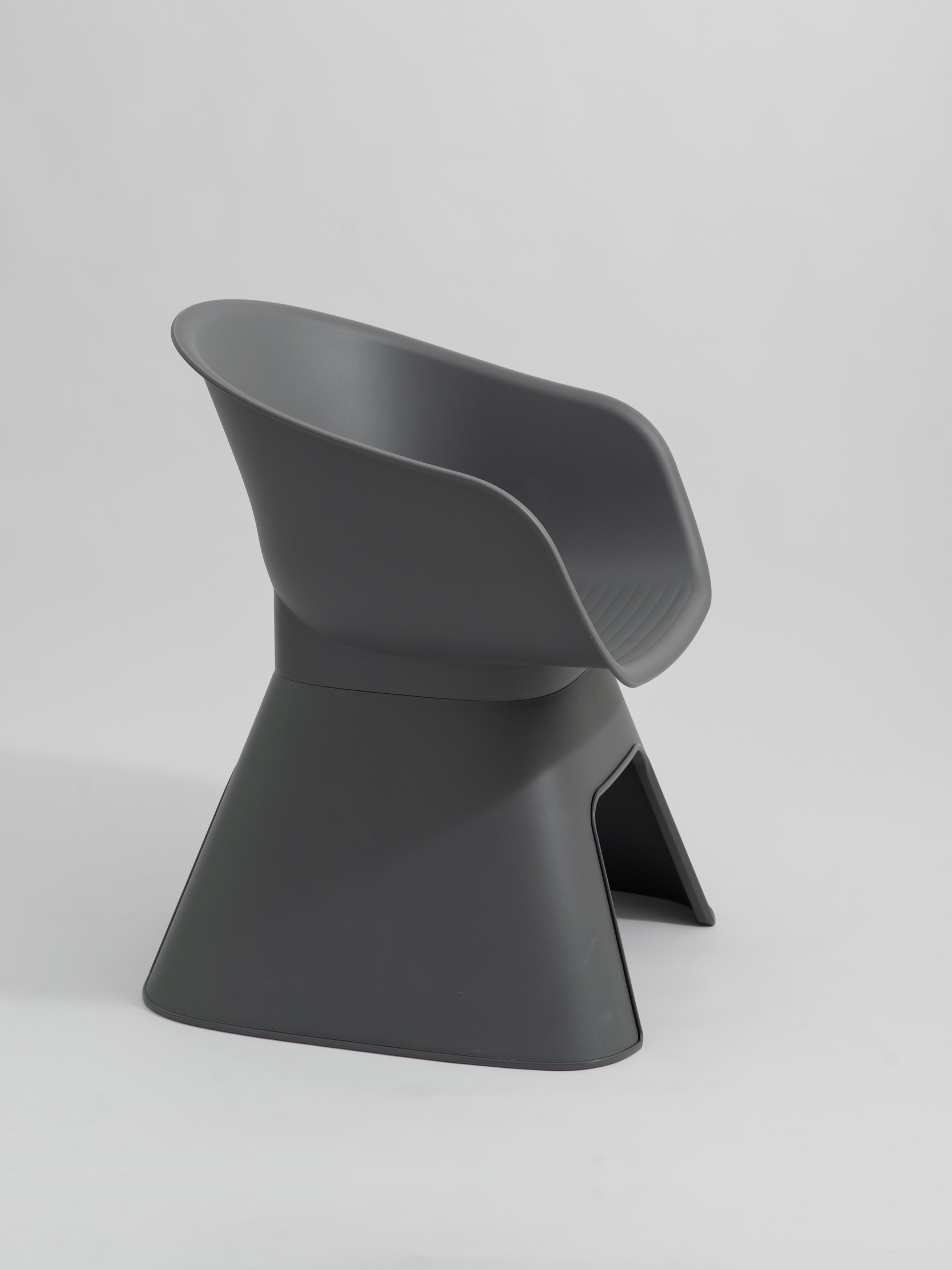
Tori reflects my ongoing interest in designing everyday industrial products that balance manufacturing efficiency, structural clarity, and a restrained, tactile formal language. The collection was designed with a soft and approachable character in mind. I wanted the objects to feel light and organic, while still remaining calm and durable in everyday use. Their rounded geometries loosely reference forms found in nature, bringing the furniture closer to its outdoor context and creating a sense of warmth and familiarity.
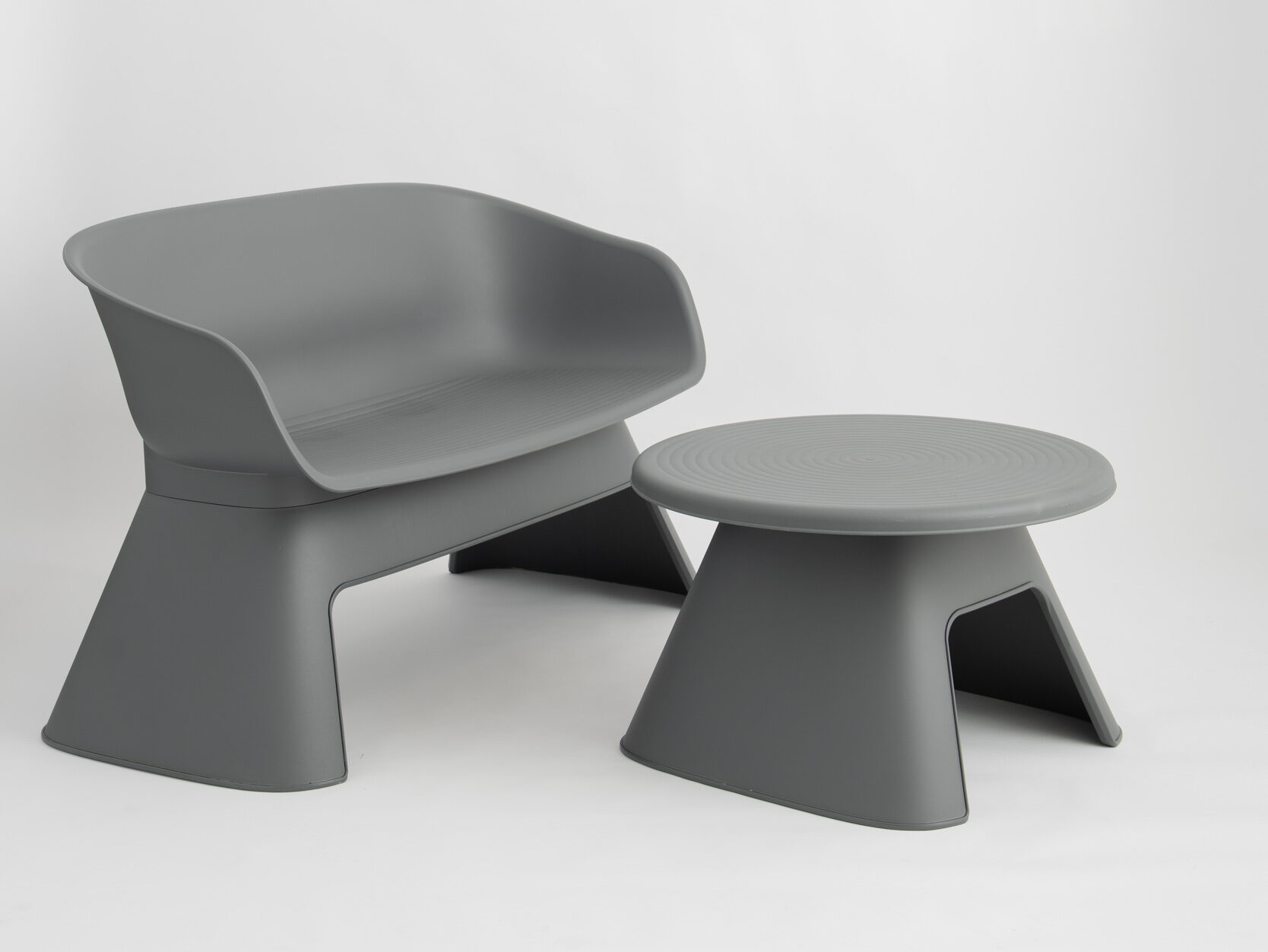
Tori is an outdoor furniture collection designed for BranQ, consisting of a lounge chair, two-seater sofa, pouf, and coffee table. The project was developed as BranQ’s entry into the outdoor furniture market and explores the possibilities of designing mass-produced furniture directly around the logic of injection molding technology.
Rather than imitating rattan, wood, or metal furniture, the project was conceived as an attempt to create a form native to plastic itself — shaped by the material, production process, and structural requirements behind it.
The collection is manufactured using injection-molded polypropylene with mineral filler. One of the key goals was to create a structure that would remain lightweight while achieving the rigidity and durability required for everyday outdoor use.
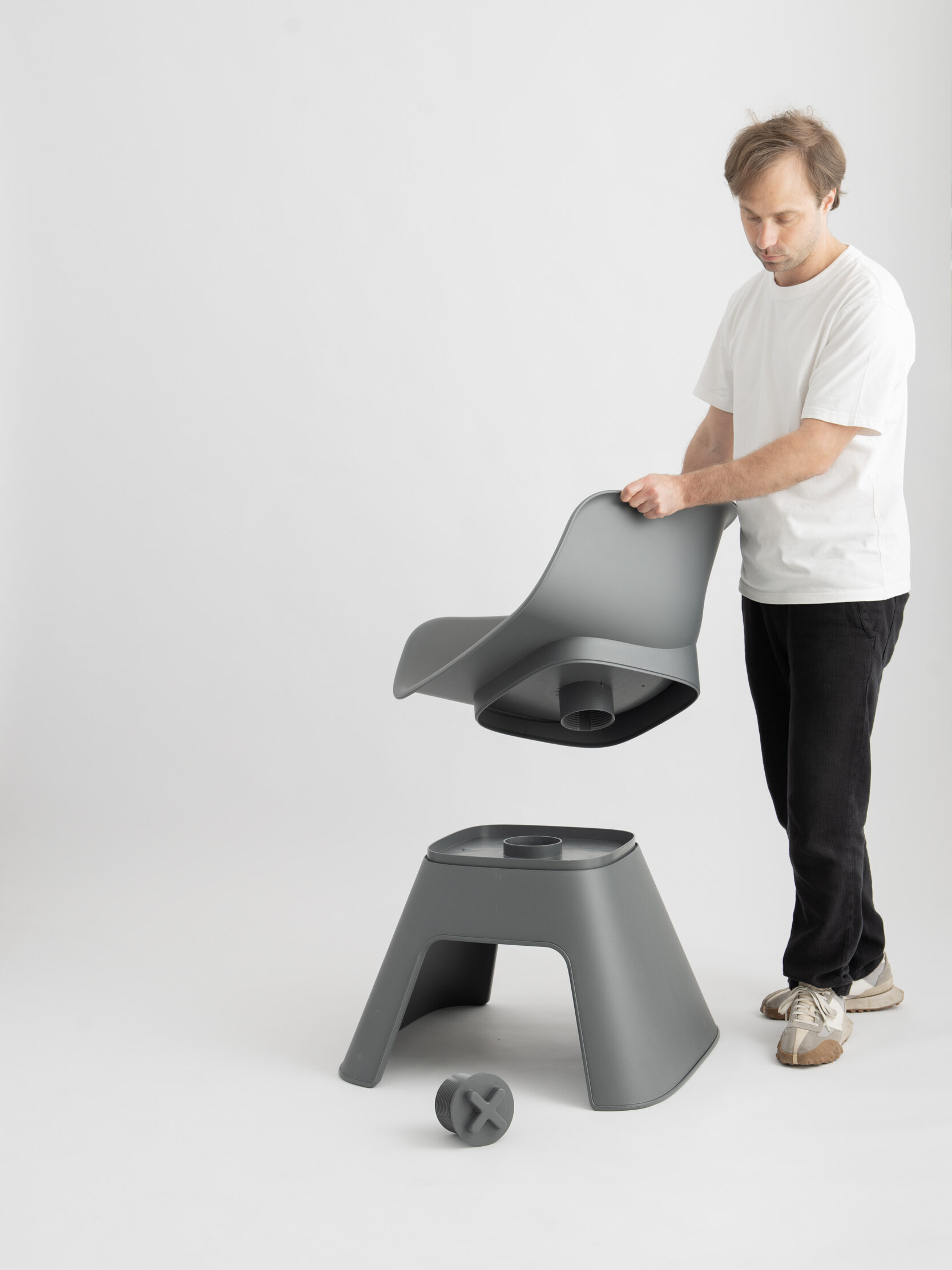
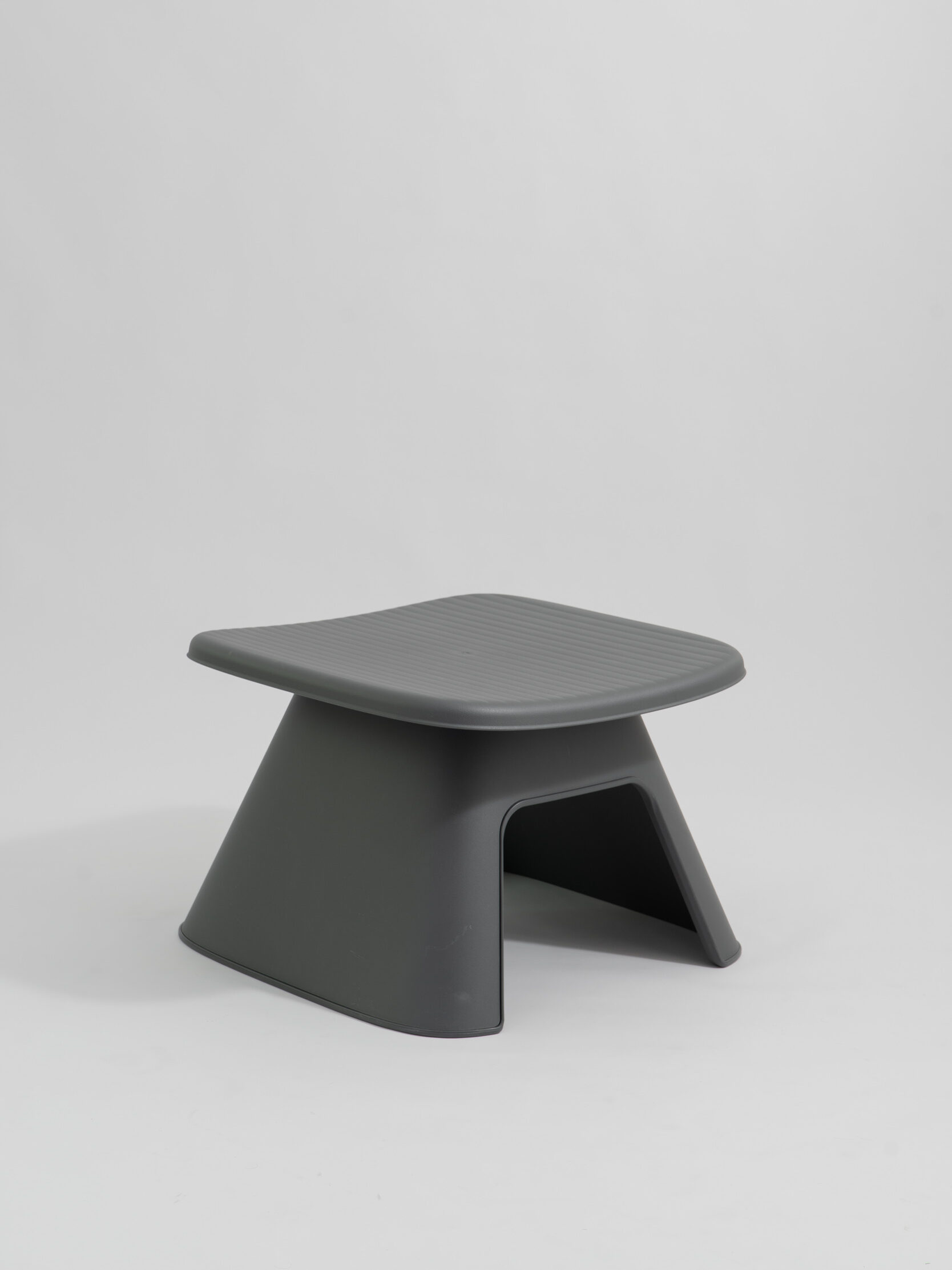
At the core of the project is a shared modular base used across multiple pieces in the collection. The chair, pouf, and table all rely on the same structural platform, while only the upper component changes depending on function. This approach reduced the number of required molds and simplified production, logistics, and packaging.
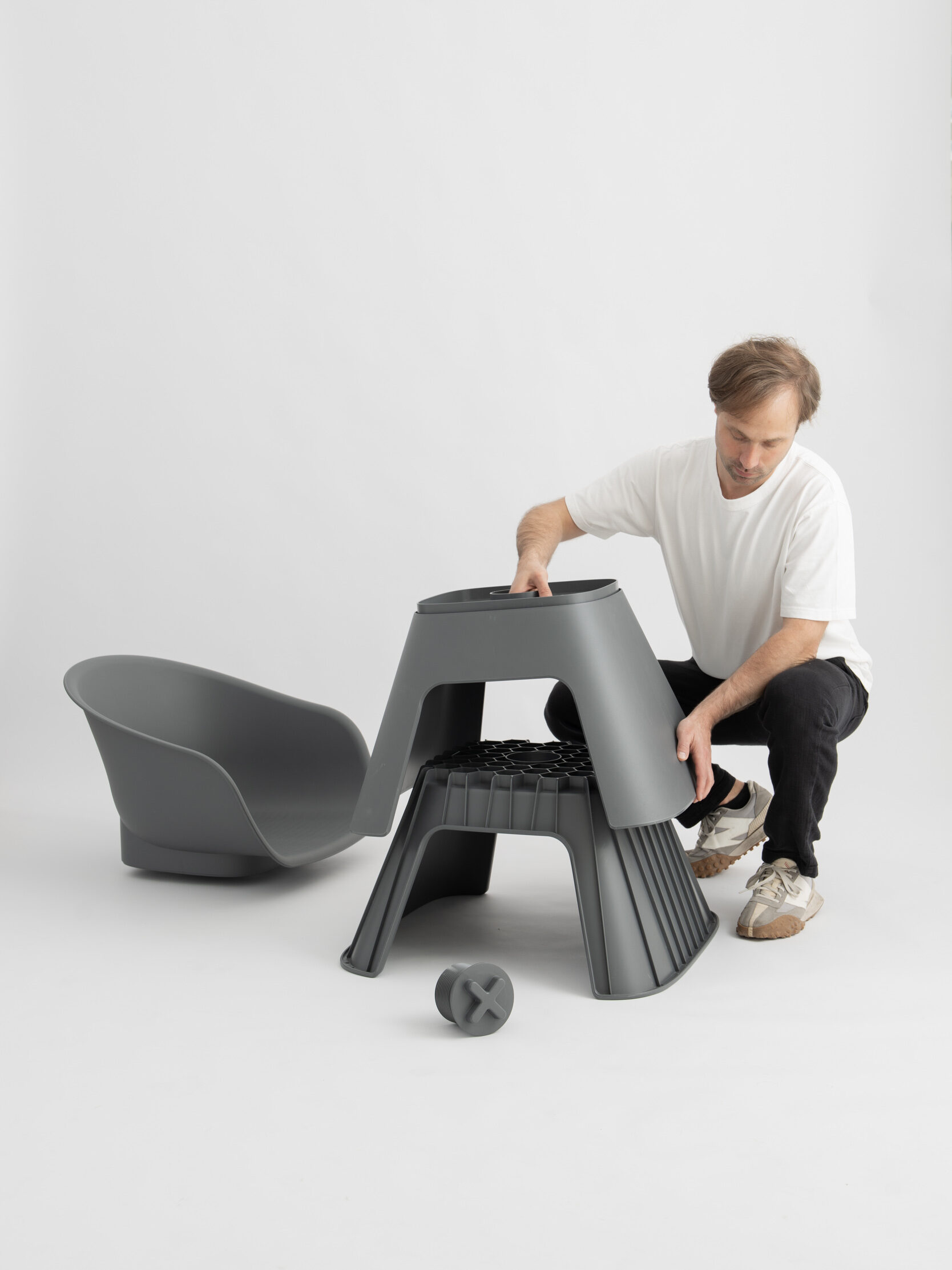
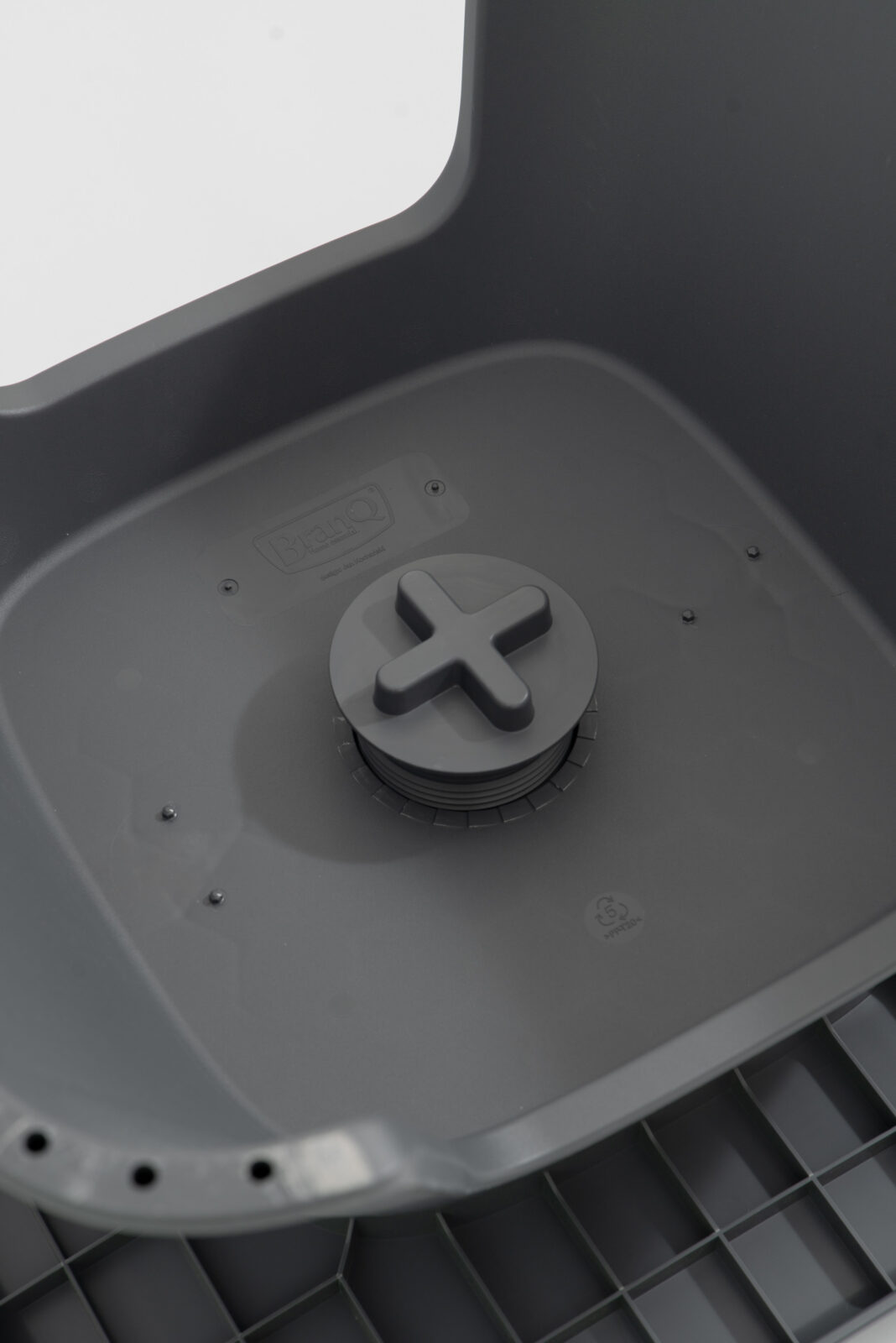
The base itself consists of two separate parts which, once assembled, create a closed box structure. This allowed the construction to remain rigid while using relatively little material. All structural ribs are hidden inside the form, allowing the exterior geometry to stay visually calm and clean.
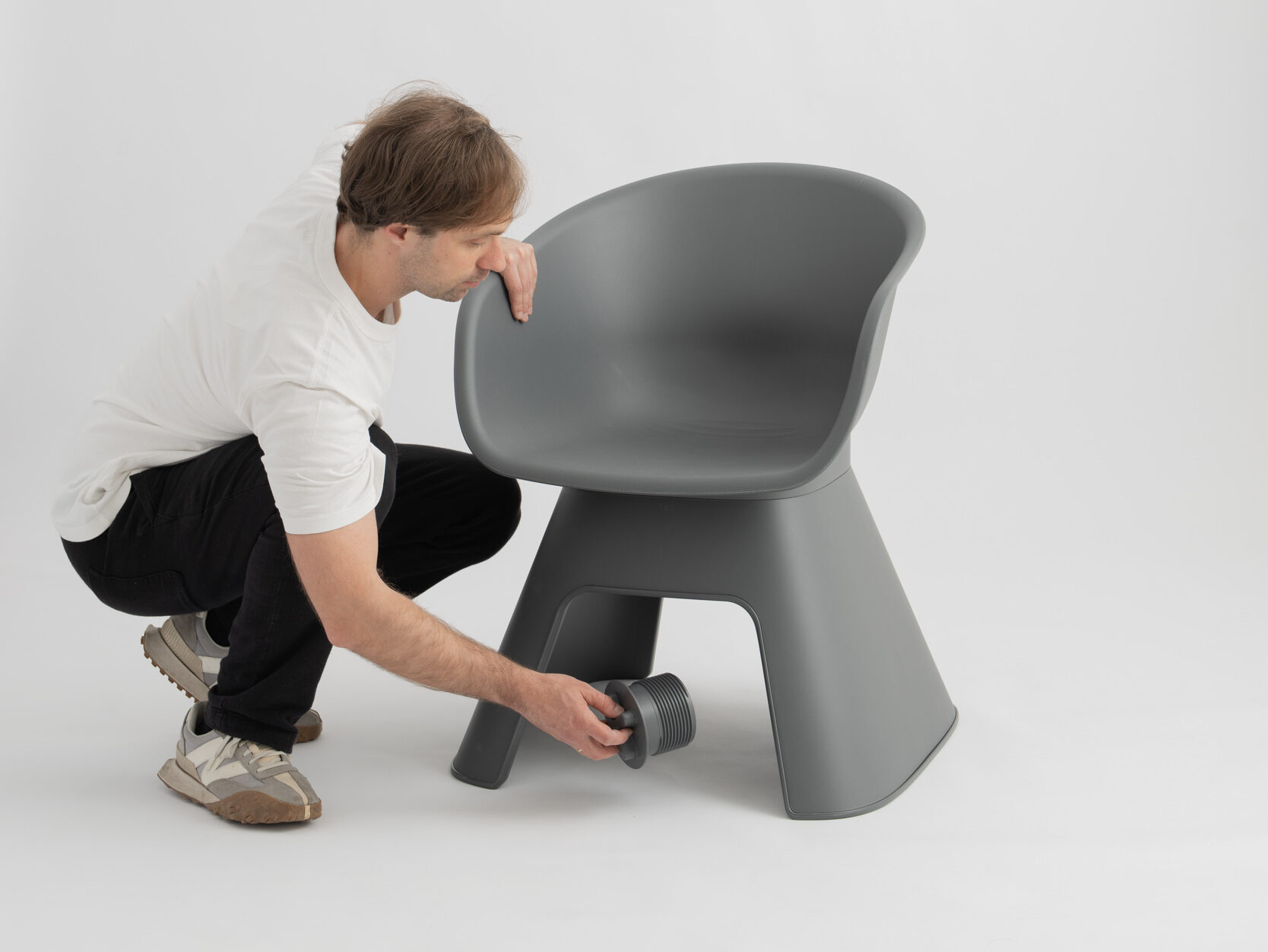
The furniture can be disassembled and assembled using a single large screw element, simplifying transport and stacking while becoming part of the visual identity of the project.
The development process combined digital modeling with extensive physical prototyping. Full-scale foam and fiberglass models were used to study proportions, ergonomics, and structural behavior. Seating ergonomics were tested using my own seating position modeling device developed during my doctoral research.
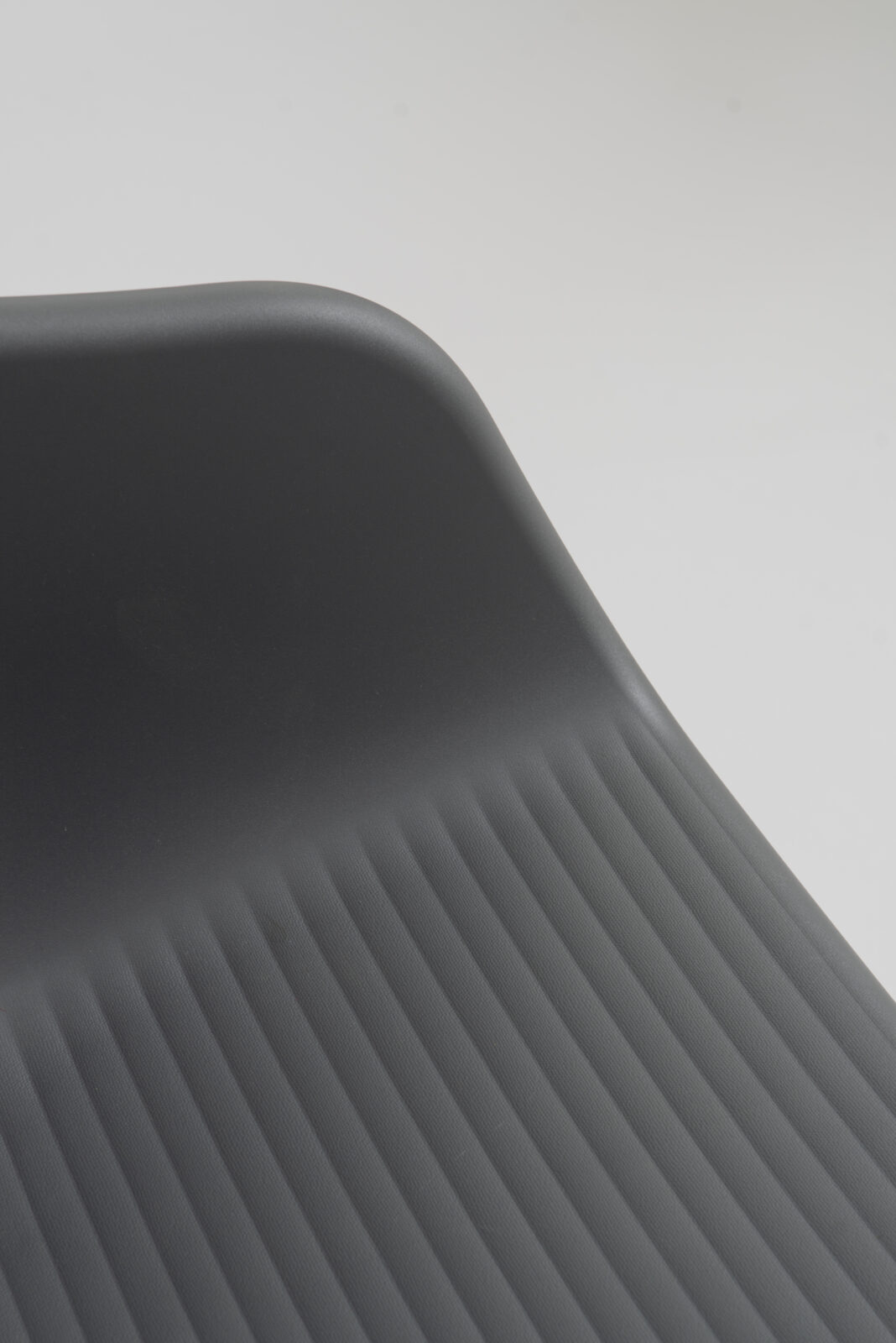
An important part of the project was also the development of surface texture and detailing. The molds were finished using photo-engraving technology, creating a subtle texture integrated directly into the geometry of the object rather than applied as decoration.
You must be logged in to post a comment.